

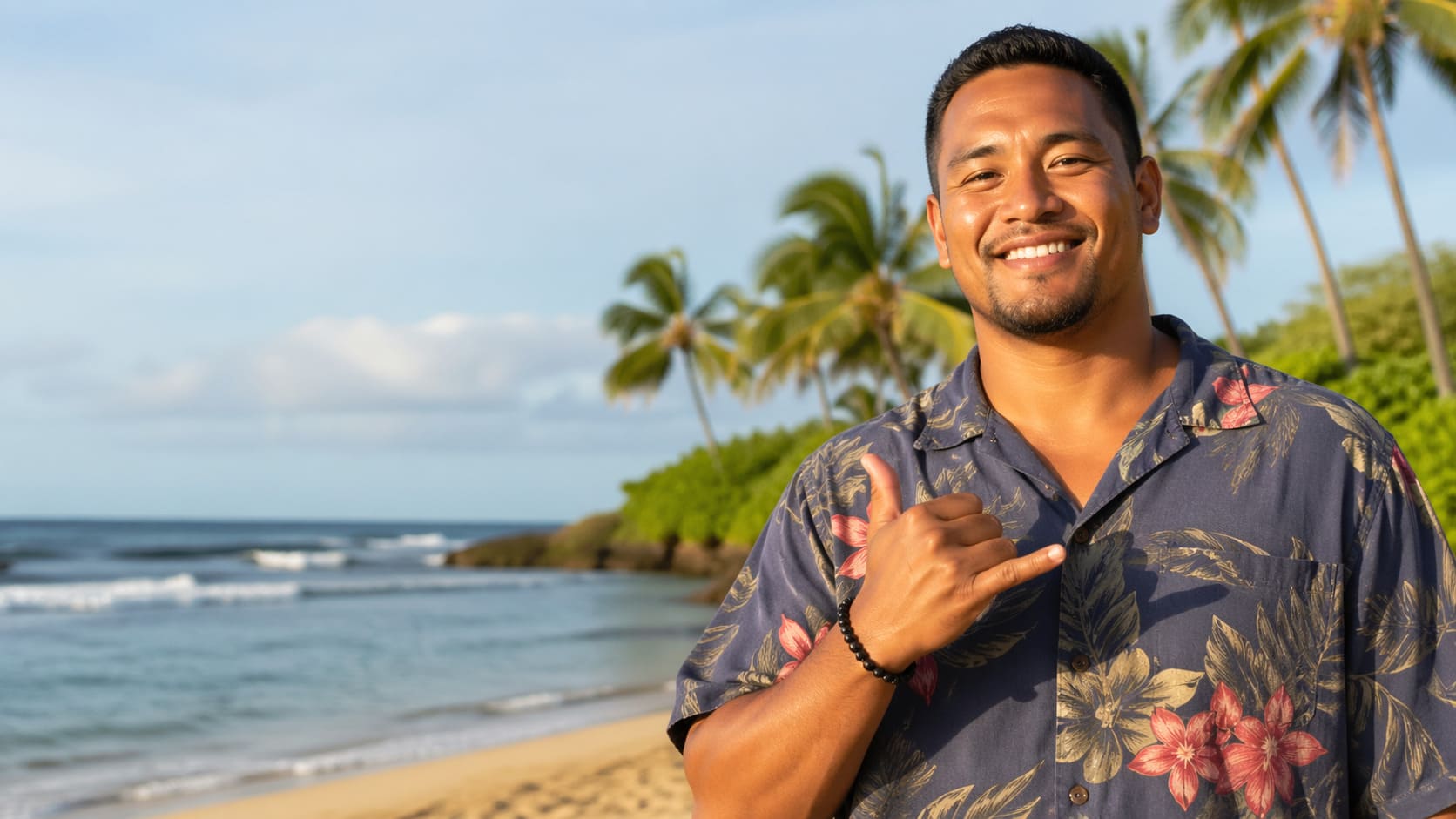
Island Gesture of Aloha
Shaka
The Hawaii shaka sign shares aloha without words, expressing thanks, friendship, “hang loose” energy and the easygoing spirit of island life.
Anyone who has visited the islands has no doubt seen the famous hand gesture coupled with the greeting "shaka, brah!" A shaka sign - the unmistakable pinky and thumb salute - is the ultimate symbol of aloha and local culture in Hawaii. Interpreted to mean "hang loose" or "right on," the shaka is a constant
reminder that in Hawaii, it is not the norm to worry or rush. The shaka sign represents the embodiment of "island style." It signals that everything is alright.
From surfers and keiki (kids) to bank tellers and news anchors, the shaka sign is universal in the islands. Use the shaka sign wherever and whenever you want to spread a little aloha, say thanks for letting you cut in on the road, or along with aloha as hello or goodbye. The shaka sign is more than just nonverbal communication. When you use it, you acknowledge the true concept of aloha and participate in the synergistic heartbeat of Hawaii.
How to Make a Shaka
To send a shaka: make a fist with either hand. Extend the thumb and pinky while keeping the middle fingers curled under. Face your thumb and pinky away from your body and
draw an invisible "j" in the air. Give your shaka a shake and you're communicating Hawaiian-style!
The Origins of Shaka
There is some debate about the origin of the shaka, although most agree that its roots lie with surf and beach culture. One version claims that the shaka sign was first used in the 1940s as a symbol of blessing by a local Hawaiian folk hero named Hamana Kalili from Laie who happened to be missing the three middle fingers on his right hand due to a sugar mill incident.
Others debate the symbol was born when Kalili waved his malformed hand to shoo away children from jumping trains. A third version claims that the symbol was born when one of the first surfers in Hawaii raised a shaking pinky and thumb out of the water after having his middle fingers bitten off by a hungry shark. Yet another version says that the origin lies with Spanish immigrants, who folded the middle fingers and brought the thumb to the lips as a friendly gesture to symbolize sharing a drink with the natives they encountered in Hawaii.
Whatever the genesis of this powerful and enjoyable symbol, it remains a strong reminder of the spirit of aloha that makes Hawaii so special. The shaka has transcended many generations and continues to unite island lovers with a unique tradition not found in any dictionary.
The naming of the symbol as "shaka" came later in the 1960s when used as a signoff by local Honolulu TV movie host Lippy Espinda, although some believe the word "shaka" was derived from an ancient Buddha named Shakyamuni, who prayed with his hands in the shape of two shakas pressed together. Another story tells that the word "shaka" was derived from the term "shark eye," a traditional compliment given to respected friends and family members. In 1976, campaigning mayoral candidate Frank Fasi quickly popularized the symbol throughout the islands after designing a campaign around
the shaka.
The shaka is a simple yet powerful way to remind locals and visitors of the way people look out for each other on the islands and strive to spread aloha day in and day out, in keeping with the Hawaiian principle of malama i kekahi i kekahi, - take care of one, take care of all. If you're new to the islands, don't be shy about throwing up shakas, just make sure you've got the hand gesture down first! Aloha in the Hawaiian language can mean love, hello, goodbye, affection, regards, fondness and compassion.
The amazing "shaka" communicates all this and more with just a simple wave of the hand.


Frequently Asked Questions
What does the shaka sign mean?
The shaka sign can mean aloha, thanks, hello, goodbye, right on, hang loose or all good. It is a friendly gesture tied to Hawaii's local culture.
How do you make a shaka?
Make a loose fist, extend your thumb and pinky, keep the three middle fingers curled and give the hand a small relaxed shake.
Where did the shaka come from?
The exact origin is debated, but one popular story connects it to Hamana Kalili of La'ie, who lost three middle fingers and became known for his distinctive wave.
Who helped popularize the word shaka?
Local television personality Lippy Espinda helped popularize the word “shaka” in the 1960s, and Honolulu politician Frank Fasi later helped spread the gesture through his campaigns.
Is the shaka only used by surfers?
No. Surfers helped spread the shaka, but people in Hawaii use it in many everyday situations, including greetings, photos, road courtesy and casual goodbyes.
Can visitors use the shaka?
Yes. Visitors can use the shaka as a friendly gesture, especially to say thanks or aloha. It is best used naturally and respectfully.
Why do drivers in Hawaii use the shaka?
Drivers often use the shaka to thank someone for letting them merge, giving them space or showing courtesy on the road.
What does “shaka, brah” mean?
“Shaka, brah” is a casual local-style expression that combines the shaka gesture with “brah,” meaning brother, friend or buddy.