

Sacred Skin Markings
Hawaiian Tattoos
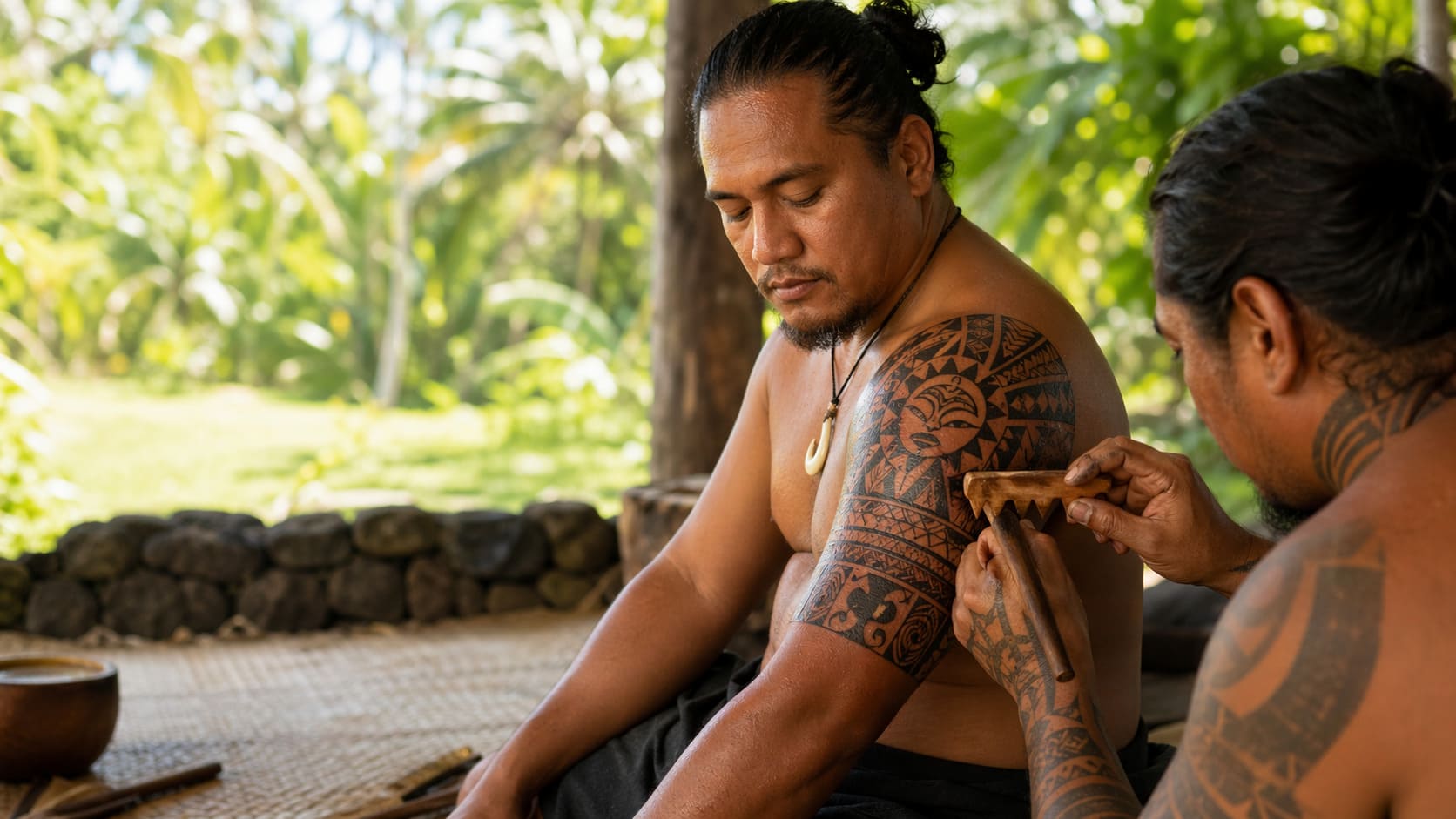
Traditional Hawaiian tattoos, known as kakau, carried meanings of identity, ancestry, protection, rank, courage and personal connection to the natural world.
Tattooing has been an important part of tribal life on the Polynesian islands for centuries, and Hawaii is no different. The tattoo artists of Hawaiian tribes were carefully trained and held in high regard within the community. In fact, having a good tattoo artist was a symbol of wealth and status at that time.
In the beginning, native designs were tattooed on the skin to designate tribe and hierarchy (even today Hawaiians view tattoos on a man’s body as a sign of status and importance) and was part of a warrior's rite of passage to get the markings that he was a full member of the community. The most heavily tattooed were the royal family, followed by other court officials and those who had married into royalty.
Black ink, the most common color of a Hawaiian tattoo and a feature still prevalent on the islands today, was most commonly made up of kukui nut ashes and sugarcane juice. Other colors were rare, but when they were employed, were made up of various brightly colored island flowers, such as the Hawaiian Iris.
Before modern safety procedures arrived, it was important to get tattooed by an artist who knew what he was doing because some of the contents of the ink they used were poisonous, and ancient instruments would have meant that the person getting tattooed was subject to extreme pain. Of course even today it is important that a tattoo artist knows what he is doing, but nowadays regulations are so strict that it is almost impossible for amateurs to operate, whereas back then, the profession was open to whoever wanted to do the job.
In the old Hawaii, skin was inked with tools from nature, like cactus barbs, bird beaks, fish bones, urchin spines and sharp animal claws. The tattoo tool would be hit by a stick to make the punctures, while assistants stretched the skin and wiped away blood.
Early tattoos were mainly made up of an array of geometric and symmetrical designs found in nature, such as stones, waves, sun and rain. But the art soon evolved - much like today - as a means of celebration and self-expression, with more pictorial forms, such as images of animals and flowers. Today, these motifs that represent the island world remain, in the form of lizards, sea turtles, sharks and dolphins.
Placement was important too - ancient lithographs show Hawaiian women wore designs concentrating mainly on their hands, feet, fingers and calves, and both men and women had facial tattooing, typically found on the brow ridge, cheek, cheek bone and chin.
What makes Hawaiian tattoo designs different from other parts of the world, and, indeed their Pacific island neighbors, is that they are bolder and larger and – given that they were originally used for individual identification rather than ceremonial purposes - usually have a hidden, personal meaning.

Frequently Asked Questions
What are traditional Hawaiian tattoos called?
Traditional Hawaiian tattoos are often called kakau, a Hawaiian word connected to tattooing, marking or writing.
What did Hawaiian tattoos symbolize?
Hawaiian tattoos could symbolize identity, genealogy, rank, courage, personal achievement, spiritual protection and connection to nature or family guardians.
What designs are common in Hawaiian tattoos?
Common designs include geometric patterns, waves, shark teeth, sun, rain, stones, turtles, lizards and other natural or symbolic motifs.
What tools did ancient Hawaiians use for tattooing?
Traditional tattoo tools could include sharpened bone, shell, fish bones, bird beaks, spines or other natural points tapped into the skin with a stick.
What ink was used in traditional Hawaiian tattoos?
Black ink was most common and was often made from natural materials such as soot or burned kukui nut ash mixed with other ingredients.
Where were Hawaiian tattoos placed on the body?
Historical accounts show tattoos on hands, fingers, feet, calves, arms and faces. Placement often added personal or cultural meaning.
Are Hawaiian tattoos still practiced today?
Yes. Hawaiian tattooing continues through modern tattoo culture, cultural revival, traditional practitioners and contemporary artists inspired by Hawaiian and Polynesian designs.
Can anyone get a Hawaiian tattoo?
Anyone considering a Hawaiian tattoo should approach it respectfully, understand the meaning of the design and work with a knowledgeable artist rather than copying sacred or personal symbols.