
Pacific Tsunami Museum

Pacific Tsunami Museum in downtown Hilo shares tsunami history, survivor stories, science exhibits and Hawaii Island's connection to the 1946 and 1960 tsunamis.

Pacific Tsunami Museum, Big Island

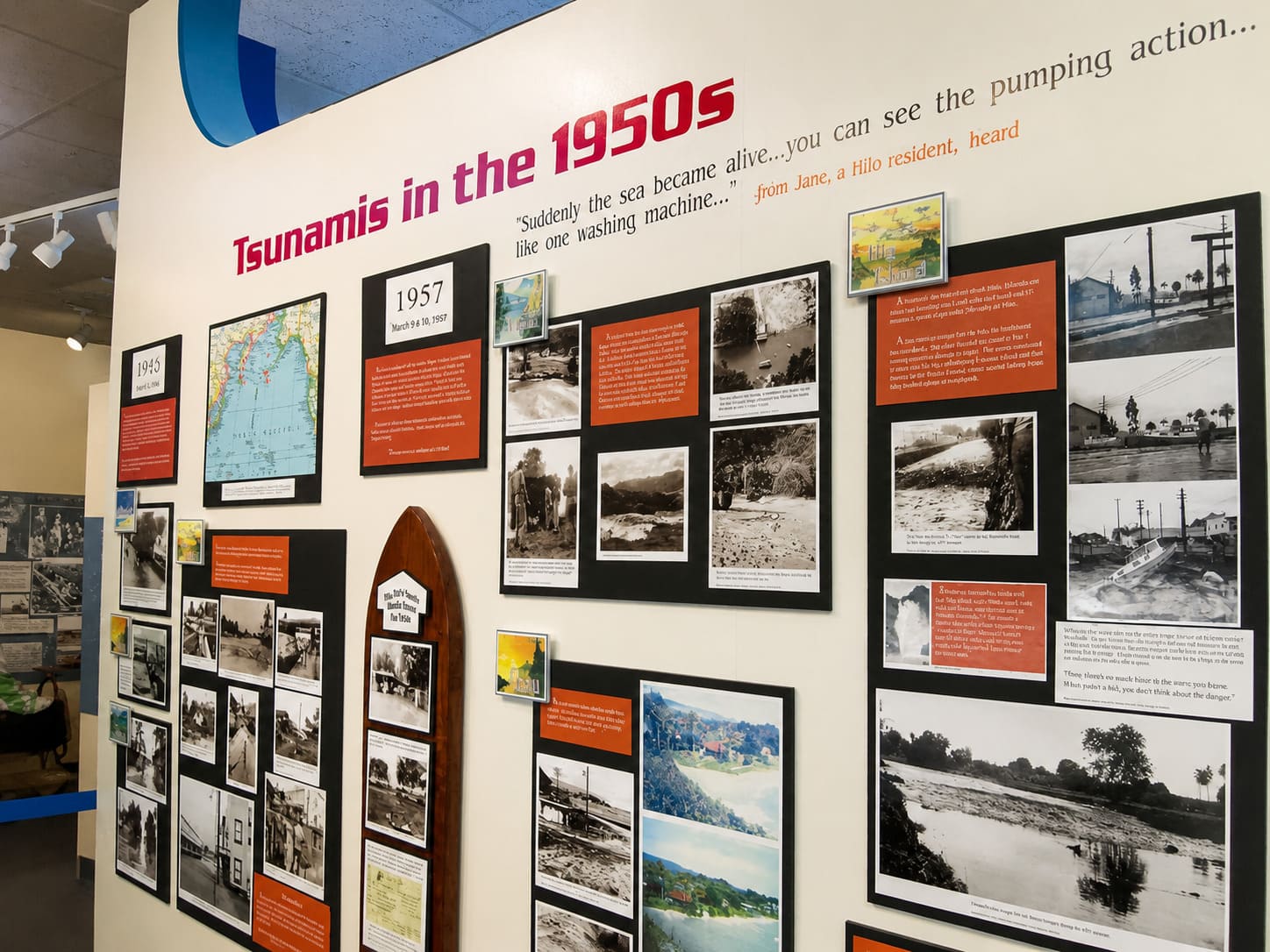
There aren't many museums dedicated to natural disasters, but here's one right in downtown Hilo. The Pacific Tsunami Museum is an informational site about the science and history of tsunamis, particularly the last Pacific-wide waves that hit the Big Island in 1946 and 1960. Located in a tsunami zone itself, the museum aims to educate people about tsunamis and how they have and continue to affect Hawaiian culture.

The museum is fairly modest, occupying a single floor with various presentations and exhibits. However, it makes good use of its space and packs every wall with information, from basic tsunami facts to stories of the waves that have impacted Hawaii. There's also a section on tsunami science and the technologies used to detect and minimize the damage of present-day tsunamis.

Most of the exhibits are a mix of educational plaques, text, photos and videos. Some of the videos are long, so if you're really interested, be sure to set aside a few hours for the trip. The most watched clip is the one detailing the destruction wrought on Hilo by the 1960 disaster. The screen is placed near the window, so you can look out at the very spot where it happened.

Key Features

Downtown Hilo museum at 130 Kamehameha Avenue
Focused on tsunami history, science, preparedness and survivor stories
Exhibits connect directly to Hilo's 1946 and 1960 tsunami history
Historic photos and oral histories are central parts of the museum
Located near Hilo Bay in an area shaped by past tsunamis
Hours are currently weekends only, 10:00 am to 2:00 pm
Limited operations are in place during museum revitalization
Admission categories are listed on the museum's official website
The museum's mission centers on education and tsunami awareness
Pacific Tsunami Museum is known for Hilo tsunami history, survivor accounts, science exhibits and coastal preparedness education

Frequently Asked Questions

Why is the Pacific Tsunami Museum in Hilo?

Hilo was heavily affected by major tsunamis, especially in 1946 and 1960, so the museum stands in a community where tsunami history is part of local memory.

What makes the museum different from a general science museum?

The museum combines tsunami science with survivor voices, historic photos and community stories, so the exhibits focus on both natural forces and human experience.

What happened in Hilo in 1946?

The April 1, 1946 tsunami caused major damage and loss of life in Hilo and other parts of Hawaii, becoming one of the defining events in the town's modern history.

Why is the 1960 tsunami important to Hilo's story?

The 1960 tsunami, generated by a great earthquake in Chile, devastated parts of Hilo and changed how the community thought about warning systems, evacuation and coastal planning.

What should visitors take away from the museum?

The museum's central message is preparedness: recognize tsunami warning signs, know evacuation zones and understand why coastal communities take tsunami alerts seriously.