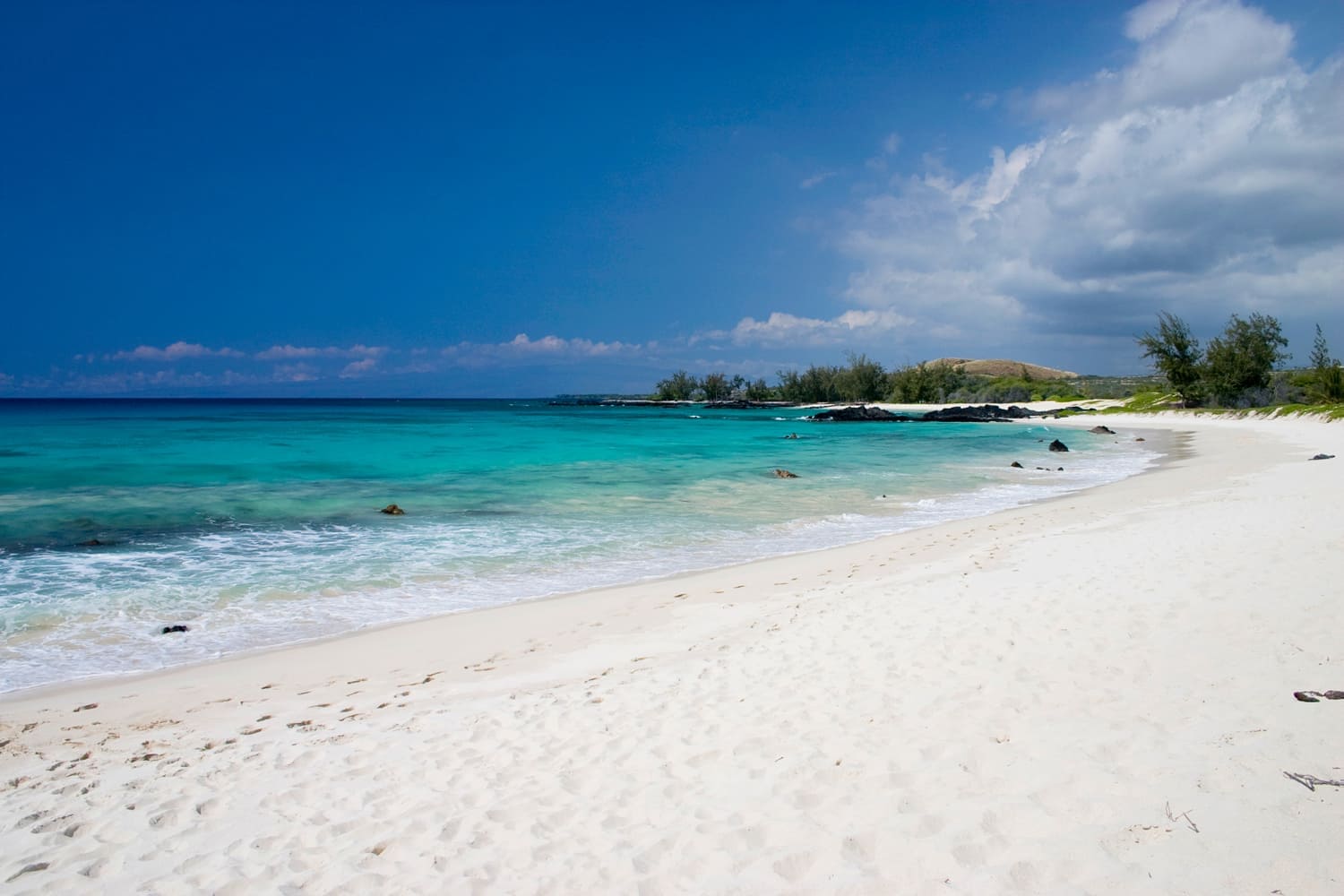
Makalawena Beach, Big Island
The Kona Coast has its share of "secret" beaches – little strips of paradise hidden by larger, better-known spots. Makalawena Beach is one such place, accessible by a 20-minute hike on a rough lava trail (or with a 4-wheel drive vehicle that can handle the bumps in the road). But anyone who has been here will agree that it is certainly worth the challenge.
Makalawena's salt-and-pepper beach is a mix of white coral chunks and black lava, strewn with larger lava rocks that create an unusual, dramatic landscape. The beach is also unique in that some of the most extensive sand dunes in the Kona district are located here. The area immediately offshore is the best for swimming because the ocean bottom is less rocky here than in the other coves and inlets of this beach. Make sure to check the water conditions before getting in, as the surf tends to be rough at times.
The Makalawena shore is lined by palm trees, and the beach has several coves and inlets, which are backed by a long, curving sand beach. Inland of the beach is the 12-acre (48,562 sq. m) Opae'ula Pond, which is one of the Big Island's most important shoreline bird sanctuaries. The pond is home to many opae'ula, or red shrimp, which are a delicacy for the birds. Some of the birds who can be seen here include the endangered Hawaiian stilt (a'eo), ducks, black-crowned night herons, coots, doves, sparrows, wandering tattlers and cardinals. Makalawena is part of the Kekaha Kai State Park area, and ocean activities such as snorkeling, scuba diving, bodyboarding and surfing depend heavily on conditions. Visitors may also see sea turtles from a respectful distance.
Key Features
Beach Activities
Activities
Beach Facilities
Facilities
Reviews
Reviews and Ratings
Visitor Reviews
Read visitor comments for Makalawena Beach. These comments do not include star ratings, so they are not included in the average rating.
Been Here? Add your Review
miki
Tue Mar 31, 2015
Steve
Thu Dec 12, 2013
Map
Location, Parking and Directions
Makalawena Beach is located in Kekaha Kai State Park on Hawaii Island's North Kona Coast, north of Kona International Airport. The beach can be reached by walking in from the Mahaiula side of the park or from the rough northern road between mile markers 88 and 89 on Highway 19.
Photos
Makalawena Beach Photos
Photos of Makalawena Beach show the white-sand shoreline, lava trail, dunes, ponds, turquoise water, coastal vegetation and remote North Kona setting.