Hawaii Tree Guide
Eucalyptus Tree
Eucalyptus trees bring tall trunks, quick growth and, in the case of rainbow eucalyptus, bark that peels into streaks of green, red, orange and purple.
Eucalyptus Tree Overview
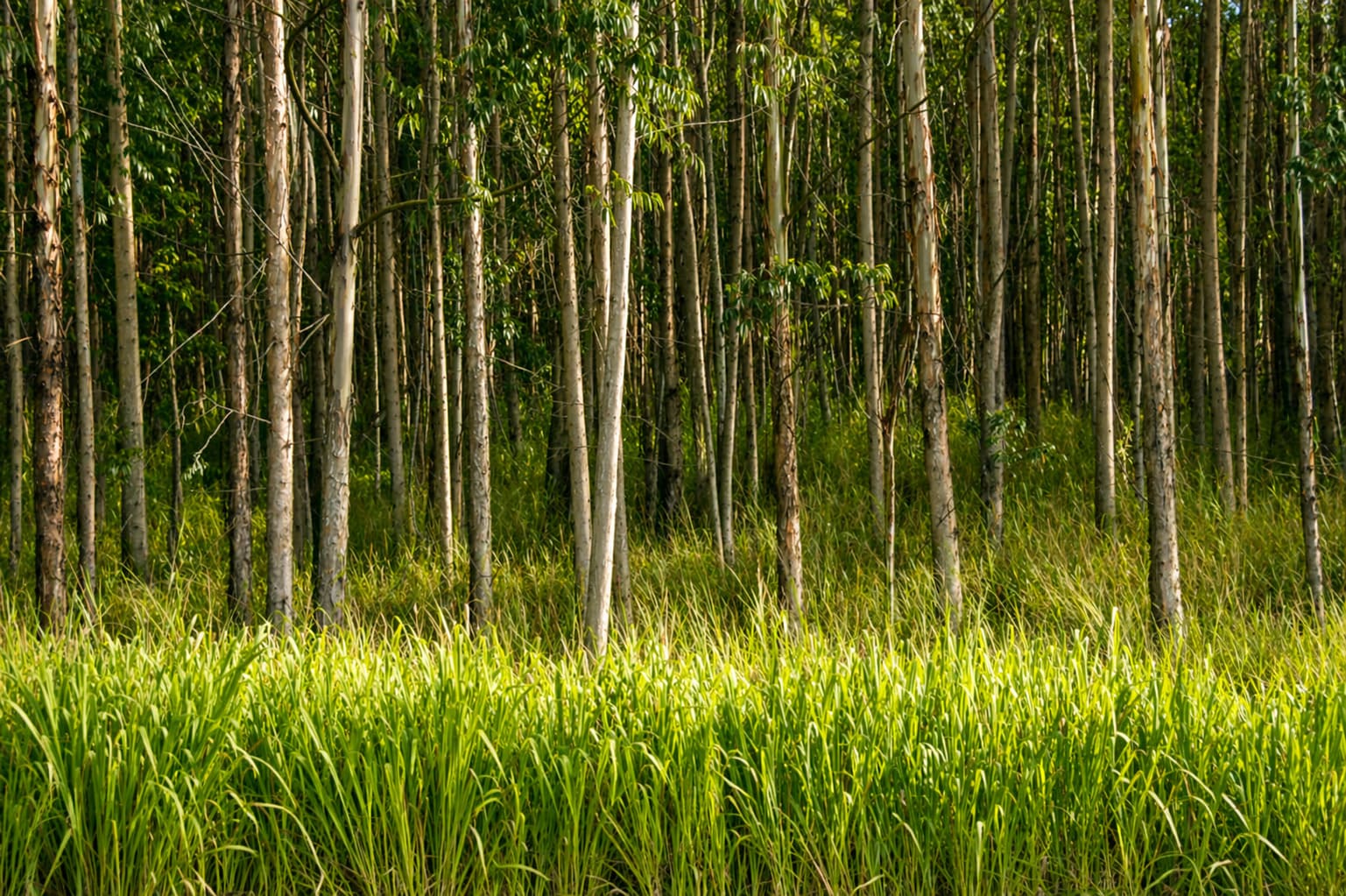
Eucalyptus trees are introduced trees in Hawaii, but many have become familiar sights along roadsides, in forested areas and in large landscapes. Native mainly to Australia, eucalyptus species are famous for fast growth, tall trunks and aromatic leaves. Some can reach remarkable heights, which places them among the tallest hardwood trees in the world.
Hawaii has more than 90 introduced eucalyptus species. Their size and growth rate made them useful in certain planting projects, but they are not native Hawaiian forest trees like koa. Eucalyptus trees can grow quickly and strongly, so they need room and the right setting. In smaller landscapes, their height, roots and falling branches can become a concern.
Rainbow Eucalyptus in Hawaii
The best-known eucalyptus in Hawaii is the rainbow eucalyptus, also called Mindanao gum or Bagras eucalyptus. Its trunk is the main attraction. As the outer bark peels away, fresh layers appear in green, red, orange, yellow, pink and purple tones. The colors change as the bark ages, creating a painted look that feels almost too bright to be real.
Rainbow eucalyptus is native to the Philippines and Indonesia, not Hawaii. It grows well in warm, moist areas and can reach about 100 feet in only seven years under favorable conditions. This quick growth makes it impressive, but also a tree best suited to open areas rather than tight yards.
Eucalyptus Trees in Island Landscapes
Travelers may see eucalyptus on scenic roads, in upland areas and near botanical garden settings. Compared with broad shade trees such as the banyan tree or food plants such as breadfruit and coconut, eucalyptus stands out for height, bark and scent.
The rainbow eucalyptus gets the most attention, but the larger eucalyptus group adds another layer to Hawaii's mix of native, canoe, farm and ornamental trees. Its colorful bark and towering form make it one of the easiest introduced trees to remember after seeing it in person.