Molokai Beaches
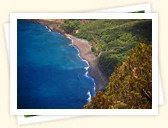
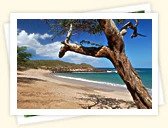
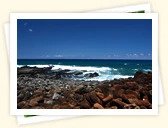
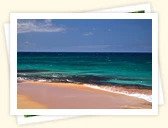
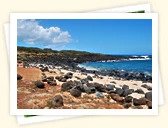
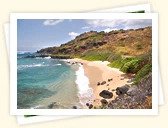
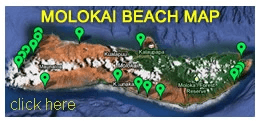 The island of Molokai has a coastline of about 88 miles (142 km). Molokai beaches are never crowded and most are rather deserted since the island is home to just a little over 7,400 residents. Also, Molokai is still off the beaten path (it hasn't been discovered by too many visitors yet).
There are only a few good swimming beaches on Molokai. Most beaches on the island are rocky and have an offshore reef or a shallow nearshore ocean bottom with murky water. On Molokai's west shore, Dixie Maru may be the best for a refreshing swim, while on Molokai's east shore, Murphy's Beach is the most popular for snorkeling. Another nice sandy beach and the perfect place for a long beach stroll is Papohaku Beach, one of the longest white-sand beaches in the entire state of Hawaii. Beach sand in Hawaii comes in all kinds of shapes and colors. Read more about Hawaiian beach sand composition.



FIND A BEACH BY NAME:
A | B | C |
D | E | F | G |
H | I | J |
K | L |
M | N |
O |
P | Q | R |
S | T | U | V | W | X | Y | Z
Awahua Beach is located on Molokai's Kalaupapa Peninsula. It is a picturesque beach, backed by lush vegetation and the world's tallest sea cliffs. The beach is composed of dark detrital sand. Read More
Located on Molokai's west shore, Dixie Maru Cove is a protected and crescent-shaped white-sand beach at the head of a small bay. The cove is surrounded by lava outcroppings and is a nice place to enjoy the water. Read More
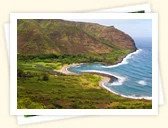
Comprised of two equally beautiful beaches, Kama'alaea Beach to the west and Kawili Beach to the east, Halawa Beach is located in gorgeous Halawa Bay on Molokai's east shore. Read More
Hale O Lono, or "House of Lono," is a long and narrow white-sand beach on Molokai's south shore. It was once a heiau, or a place of worship, for Lono, who is the god of agriculture and fertility. Read More
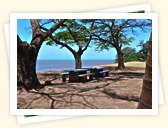
This is a roadside park with a narrow beach. The swimming conditions are poor here because the ocean bottom is rocky, shallow and the water generally murky. It is primarily visited by fishermen and picnickers. Read More
The nearshore ocean bottom at Kamiloloa Beach is shallow and rocky and the water is murky. Offshore is a barrier reef. This is a good beach for relaxation or a picnic, but not for swimming. Read More
Kaupoa Beach is made up of two beaches shaped like crescent moons and beautified by white sands, crystal clear waters and dark lava rocks. Numerous shipwrecks have occurred in this area in the past. Read More
Kepuhi Beach is a long and wide sandy beach with azure blue waters. It offers scenic views of Kaiaka Rock on its southern end, which was once the location of a heiau (Hawaiian temple). Read More
Kiowea Beach Park is located next to the Kapuaiwa Coconut Grove on Molokai's south shore. In the past, there had been several freshwater springs along the shoreline, but because of erosion, they are now located in the ocean offshore. Read More
Mo'omomi Beach and the surrounding area that extends inland feature one of the most impressive sand dunes in Hawaii. These massive sand dunes have been formed over centuries, extending inland for more than four miles in some areas. Read More
Murphy's Beach is a narrow white-sand beach shaded by ironwood trees. The swimming conditions are fair and most suitable for children as the ocean bottom is shallow and rocky, with a few sandy patches inbetween. Read More
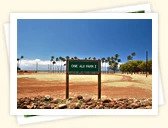
One Ali'i Beach Park has two spacious sections, ideal for large family gatherings and playing ball games. The beach in both areas is narrow and the nearshore ocean bottom is shallow and rocky. Read More
Paka'a Beach on Molokai's west shore is a small rocky bay. There is no sandy beach here, only boulders. Some local residents come here to go diving and fishing. The beach access road is easy to overlook. Read More
Spanning a distance of 2 miles (3.2 km) long and 100 yards (91 m) wide, Papohaku Beach is one of the longest and widest white-sand beaches in the Hawaiian Islands - a great place for a long shoreline stroll. Read More
Located on Molokai's west shore, Pohakumauliuli Beach features two sandy beach coves and a few large tide pools. The remote coves are picturesque and nice spots for sunbathing or a picnic. Read More
Po'olau Beach is a small sandy cove on Molokai's west shore, located south of the more popular Papohaku Beach. Parts of the beach as well as the nearshore ocean bottom are covered by lava rocks. Read More
Sandy Beach is a small roadside pocket of sand and one of the best swimming beaches on the island. The nearshore ocean bottom is deeper here, so it's easier to enter the water without having to walk on reef and rocks. Read More