Hawaii Tree Guide
Banana Tree
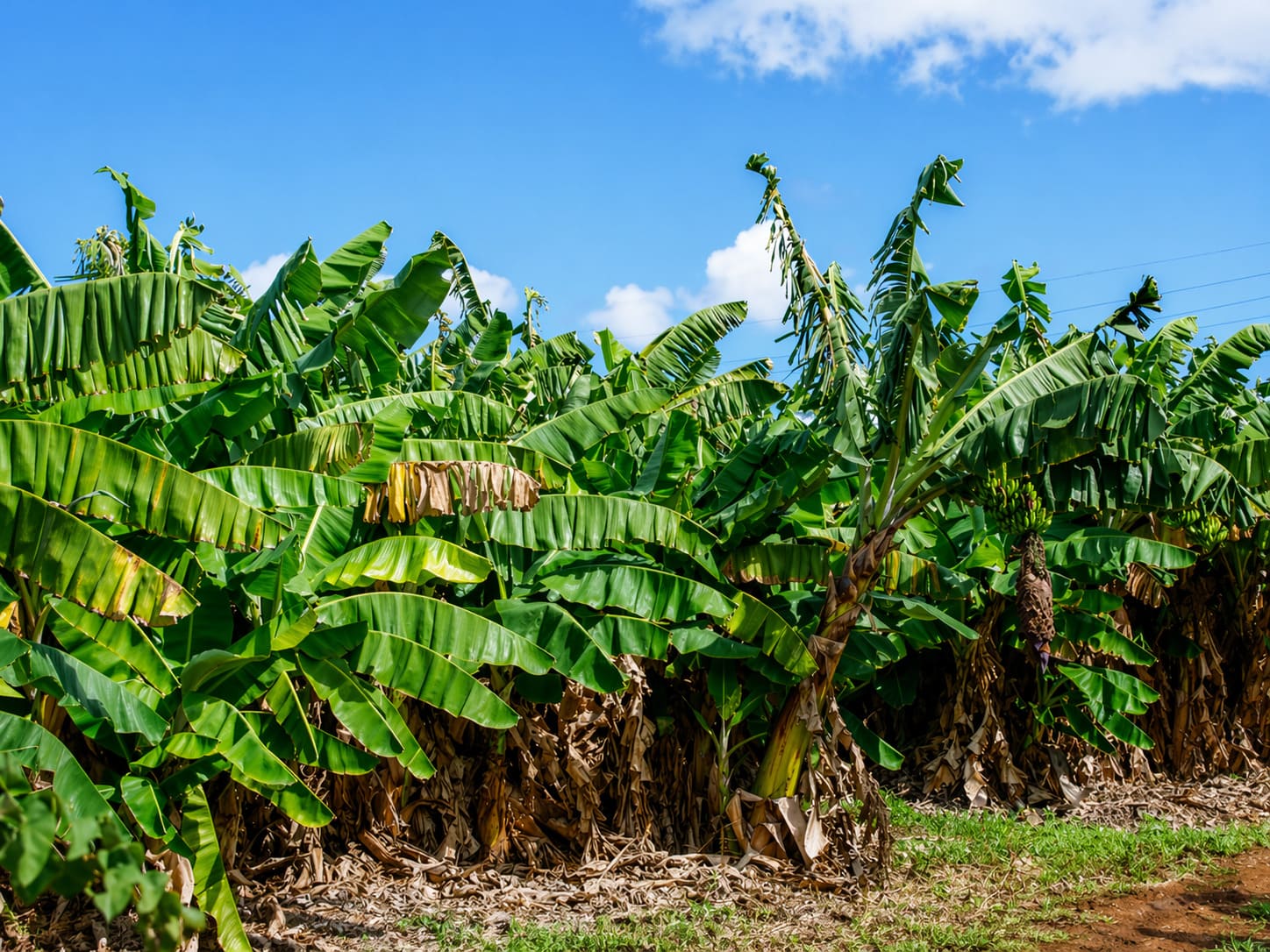
The banana plant is one of Hawaii's familiar food plants, with broad leaves, a hanging flower stalk and fruit that grows in heavy green clusters.
Banana Tree Overview
The banana plant is one of the most familiar food plants in Hawaii, but botanically it is not a true tree. It is a giant herb with a trunk-like pseudostem formed by tightly wrapped leaf bases. Some varieties can reach about 30 feet tall, giving the plant a tree-like look even though its structure is very different from woody trees such as koa or banyan.
Banana leaves are large, soft and easily torn by wind, which is why older plants often have a fringed, tropical look. New leaves push upward from the center of the plant through the tight leaf-stem column. As the plant grows, it builds enough strength to send out a flower stalk from the center.
Fruit, Shoots and Growth Cycle
After about a year of growth, the banana plant sends out a hanging flower spear. The flowers develop into clusters of bananas, which mature over time on the drooping stalk. Once the fruit ripens, that main stalk will not fruit again. The old stalk is usually cut back, while the underground corm sends up new shoots to continue the cycle.
This renewing growth habit makes banana patches long-lasting when they have enough warmth, water and space. In Hawaii, bananas grow in many backyards, farms, valleys and wetter garden areas. They are often seen near other useful plants such as coconut, breadfruit, noni and taro.
Bananas in Hawaii
Ancient Hawaiians cultivated many banana varieties, and the plant became an important food source across the Islands. Banana fruit could be eaten fresh or cooked, while the leaves were useful for wrapping and steaming food. The plant's quick growth also made it valuable around homes and farms.
Today, banana remains a common part of Hawaii's garden and farm landscapes. Its broad leaves, clustered fruit and fast-growing shoots make it easy to recognize, even for visitors who only spot it from a roadside or garden path.