
Kauna'oa Bay (Mauna Kea Beach), Big Island
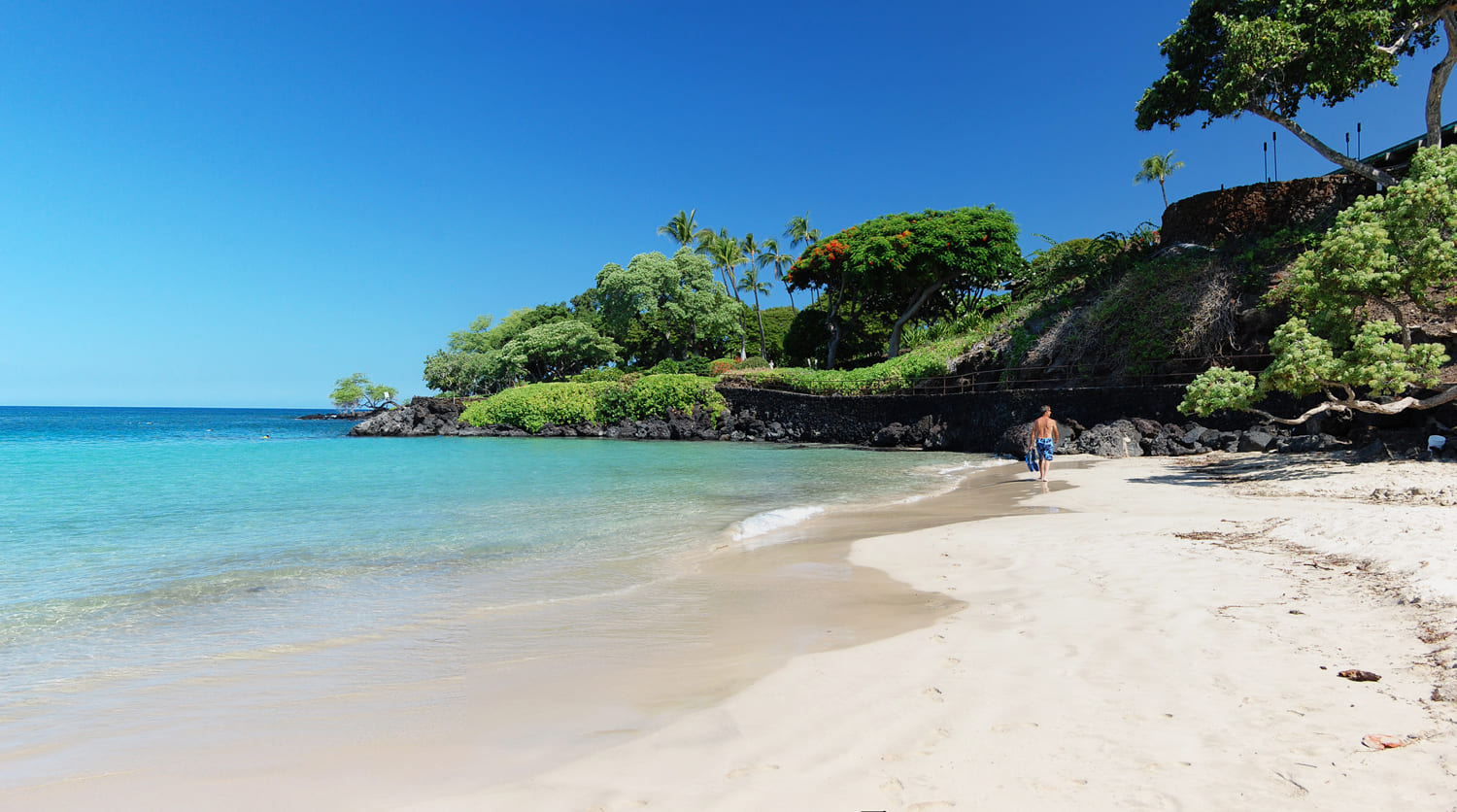
"Perfect" has been used to describe Kauna'oa Bay on several occasions, and one look is enough to see why. Fringed with leafy palm trees and fine, golden sand, this beach is considered one of the island's best. White-sand beaches like this one are rare on the Big Island. It is no wonder that Kauna'oa Bay has consistently ranked among the top five beaches in the U.S.
Stretching for about half a mile (800 m), the beach has two coral reefs and generally calm waters. The gently sloping shore at this cove is a good spot for sunbathing, but more adventurous visitors can try snorkeling along the rocky, southern side of the beach, where sea turtles, parrotfish, butterflyfish and other tropical fish can be spotted. However, during times of high surf, which is common in the winter months, a pounding shorebreak and strong rip currents can make entering the ocean hazardous.
Kauna'oa Bay fronts the Mauna Kea Beach Hotel and is therefore also known as Mauna Kea Beach. It is a public beach, but if you're not staying at the hotel, you'll have to get a beach access pass at the resort entrance gate. Tip: arrive early to ensure you're not turned away, as there are only 40 public parking spaces for beach visitors.
Kauna'oa is one of the well-maintained beaches on the island. Most of the facilities can be found in or close to the hotel, and equipment rentals are available at several beachfront shops. Nearby Mauna Kea vacation rentals may be useful for visitors staying close to this part of the Kohala Coast.
For visitors who stick around after the sun has gone down, the hotel turns on floodlights over the water. These lights attract plankton, which in turn attract hungry manta rays. There's even a lookout called "Manta Ray Point" where one can get a good view of these interesting evening visitors.
Two other smaller beaches can be accessed by walking for about 1.5 miles (2.4 km) north of Kauna'oa - Wai'ula'ula Beach and Mau'umae Beach. Both are two small pockets of white sand.
Key Features
Beach Activities
Activities
Beach Facilities
Facilities
Reviews
Reviews and Ratings
Visitor Reviews
Be the first to review Kauna'oa Bay (Mauna Kea Beach).
Been Here? Add your Review
Map
Location, Parking and Directions
Kauna'oa Bay, also known as Mauna Kea Beach, is located on Mauna Kea Beach Drive in Kamuela on Hawaii Island's Kohala Coast. From Kona, take Highway 19 north and turn left near mile marker 68. Request a public beach parking pass at the Mauna Kea Beach Hotel entrance gate, then continue to the beach parking area if spaces are still available.
Photos
Kauna'oa Bay (Mauna Kea Beach) Photos
Photos show Kauna'oa Bay, Mauna Kea Beach, white sand, palm trees, rocky beach ends, Mauna Kea Beach Hotel views, coastal paths and Kohala Coast sunset scenery.


Video


