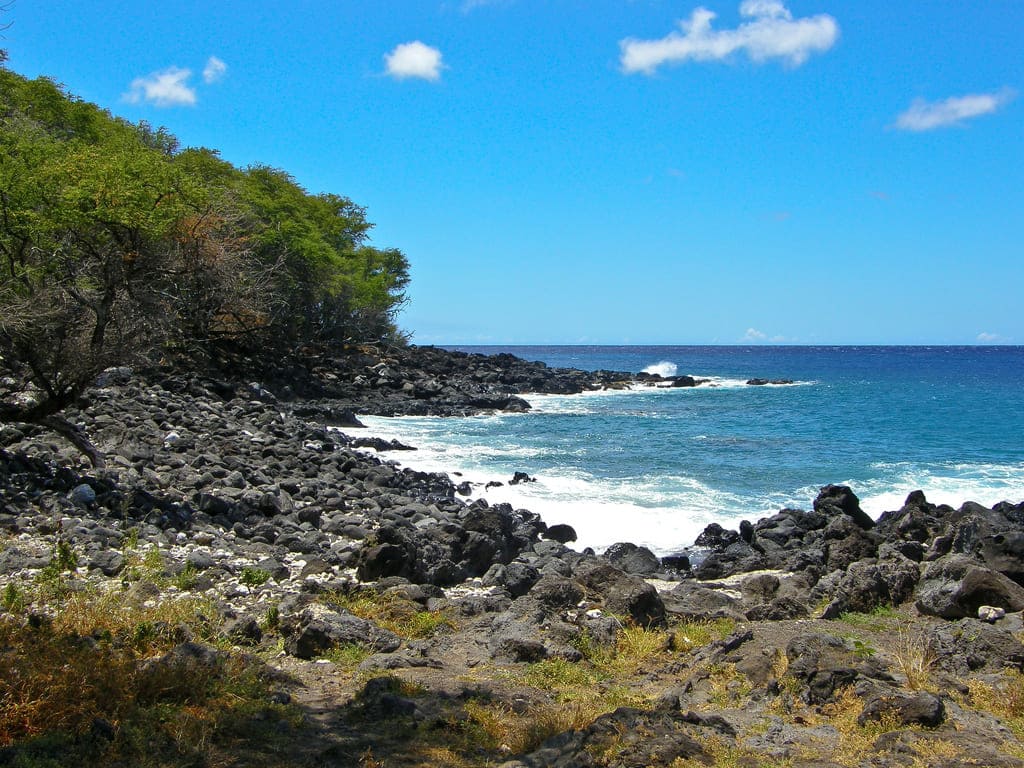
Kapa'a Beach Park, Big Island
If you like your beaches small and private, you'll love this quiet rocky beach on the Big Island's northwestern shore. However, the shoreline here is rocky and the beach is not good for swimming. Kapa'a is mainly visited by picnickers, fishermen and divers.
In the summer, the nearshore fishing conditions are good, but in the winter, heavy surf and strong currents make entering the ocean dangerous. The water is exceptionally clear here when the ocean is calm, and even though there is no coral reef to marvel at, the many colorful fish make up for it.
In the old Hawaii, this remote area was well-populated and up until today, many habitation ruins surround the beach, such as yard walls, platforms and enclosures. Many of them are hidden under thick vegetation. Related pages include Hawaiian history and Big Island scuba diving for visitors interested in the area’s shoreline and underwater setting.
Camping is allowed on the beach (but a permit is required) and is popular among backpackers. The park has fairly good facilities, including restrooms, showers, picnic tables, barbecue grills and a pavilion. Nearby Mahukona Beach Park and Big Island snorkeling pages may also be useful when planning North Kohala coast stops.
Key Features
Beach Activities
Activities
Beach Facilities
Facilities
Reviews
Reviews and Ratings
Share the first review
Have you visited Kapa'a Beach Park? A few thoughtful details can help another traveler.
Been here? Share your experience
Map
Location, Parking and Directions
Kapa'a Beach Park is located on Kapa'a Park Road in North Kohala, on Hawaii Island's northwestern coast. The beach park is about 1.25 miles north of Mahukona Beach Park, off Highway 270. Follow the signed road toward the coast and park in the beach park area.
Photos
Kapa'a Beach Park Photos
Photos show Kapa'a Beach Park, rocky North Kohala shoreline, ocean views, picnic and camping areas, coastal vegetation, parking area and rugged beach scenery.