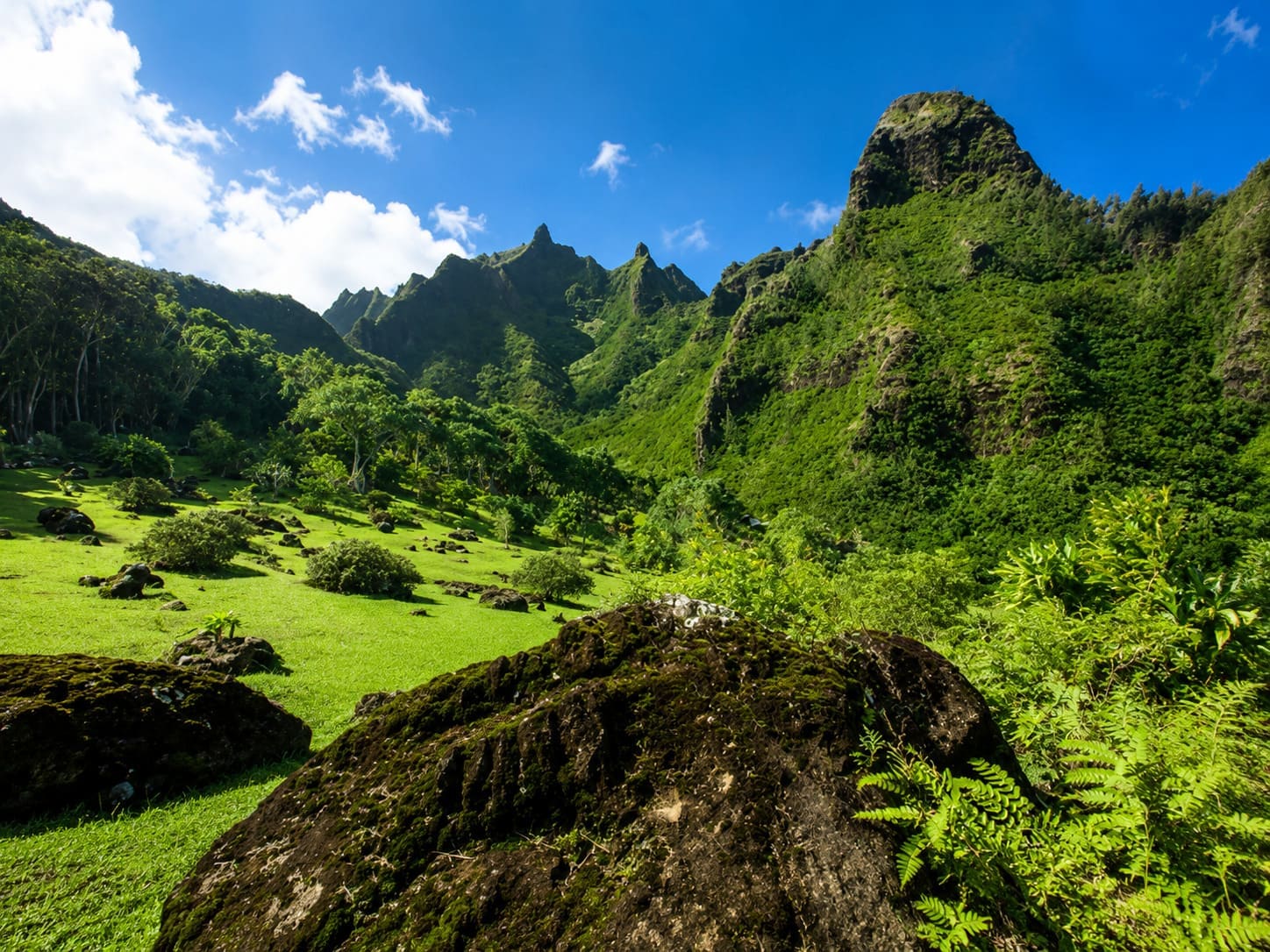
Limahuli Garden, Kauai
Located in Ha'ena on the north shore of Kauai, the Limahuli Garden is set in a lush tropical valley, overlooking the Pacific Ocean and the majestic Makana Mountain. It extends for over 1,000 acres (4 km²) of tropical rainforest and covers three distinct ecological zones. Seventeen acres are available to the public. The remaining acres are a protected nature preserve. A 3/4 mile (1.2 km) long loop trail leads through the garden. It has some steep areas.
Guided or self-guided tours examine the lava rock terraces built by ancient Hawaiians to cultivate taro, an important food crop originally introduced by the Polynesians. The Limahuli Garden is dedicated to the preservation of native Hawaiian culture and plants. It is also the location of ongoing research and educational programs.
Taro and other plants make up the garden's collection. There is a plantation-era garden and examples of invasive species of plants introduced by modern man. The Limahuli Garden was chosen by the American Horticultural Society as the best natural botanical garden in the United States.
Online reservations are strongly encouraged to ensure parking (if you are driving). Guided tours require advanced reservations. Garden visitors are encouraged to use the North Shore Shuttle service (more info is available on gohaena.com). Reservations for self-guided tours are NOT required for visitors arriving by shuttle. The garden also offers a special discount for North Shore Shuttle users.
Key Features
Reviews
Reviews and Ratings
Visitor Reviews
Read visitor comments for Limahuli Garden. These comments do not include star ratings, so they are not included in the average rating.
Been Here? Add your Review
Kathy
Sat May 05, 2018
Map
Location, Parking and Directions
Limahuli Garden & Preserve is in Ha'ena on Kauai's North Shore, west of Hanalei and near the road toward Ke'e Beach and the Kalalau Trail. The garden sits below steep green mountains in Limahuli Valley, with access from Kuhio Highway, Highway 560.
Photos
Limahuli Garden Photos
Photos of Limahuli Garden & Preserve show native plants, taro terraces, mountain walls, valley scenery, garden paths, cultural landscape details and the lush North Shore setting.