





Lanai Towns and Ancient Settlements
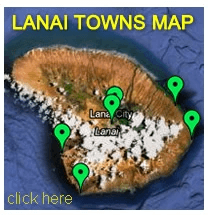 The island of Lanai has only one major town. It is called Lanai City, but in reality it is a small, sleepy town with a population of 3,102. Most Lanai residents live here, in the central part of the island.
There are a few more homes on the island's south shore, but other than that the places listed here are ancient Hawaiian fishing villages and people no longer live there.
FIND BY NAME:
A | B | C | D | E | F | G | H | I | J | K | L | M | N | O | P | Q | R | S | T | U | V | W | X | Y | Z
A | B | C | D | E | F | G | H | I | J | K | L | M | N | O | P | Q | R | S | T | U | V | W | X | Y | Z

Located on Lanai's west shore is the coastal village and harbor of Kaumalapau. The harbor was built by James Dole, the founder of the Hawaiian Pineapple Company. When it was completed, it included a 400-foot (122 m) long concrete wharf. Read More

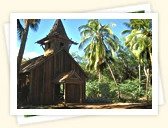

Lanai City is the main residential development on Lanai, located in the center of the island. It was developed by James Dole in the early 1920s and was recently named one of the top most endangered historic sites in the U.S. Read More