










|
Heritage: Cultural legacy or tradition passed on within a community
from one generation to another
Hawaii’s heritage is one of the most diverse in the world, thanks to
its status as the mid-Pacific melting pot. Hundreds of years of rich
cultural traditions of the Hawaiian people intermingle with the ancestry
of immigrant
populations
to create a synergy unlike anything you’ve ever experienced.
Local heritage in Hawaii could encompass a tradition, dance, or
food
from China, Japan, the Philippines, Samoa, Portugal, Korea, Tahiti,
New Zealand and many other locations. In any given weekend, you might
immerse yourself in local heritage by attending a
hula
competition, a Japanese bon dance festival, or a local Buddhist temple.
Simply by spending time in Hawaii, you are enjoying the product of generations
of strong heritage. Grab a longboard and head out to
surf,
or sample some kalua pig or poi and you are repeating what ancient Hawaiians
did over a century ago. Use the phrase “aloha”
or “mahalo” and you are paying tribute to an incredibly expressive
language that continues to unite Hawaiians with their land and their
people.
For a unique glimpse into the pure, undisturbed Hawaiian heritage, the
civilization that existed before Christian missionaries arrived, visit
the Bishop Museum, pick up a book on
Hawaiian
history or
culture, or talk to a local Hawaiian with strong roots. Find out
how the Hawaiians of yesterday thrived and discover an ancient civilization
inspired by love of the land, strong cultural identity and a supreme
connection with ancestors. Visit Iolani Palace, the former residence
of
royalty, Kawaihao Church, worship house of Hawaii’s rulers, or Washington
Place, home of Queen Liliuokalani. The Hawaii State Library in Honolulu
has a large section devoted to Hawaiian and Pacific studies. Wherever
you are in the islands, it is not hard to experience links to the past.
Hawaiian heritage connects the past with the present and keeps local
Hawaiians strongly tied to the generations before them that watched
over the land. Cultural traditions, such as the one-year baby
luau,
the paina (party), ukulele
music on the beach and enjoying poi link today’s Hawaiians with
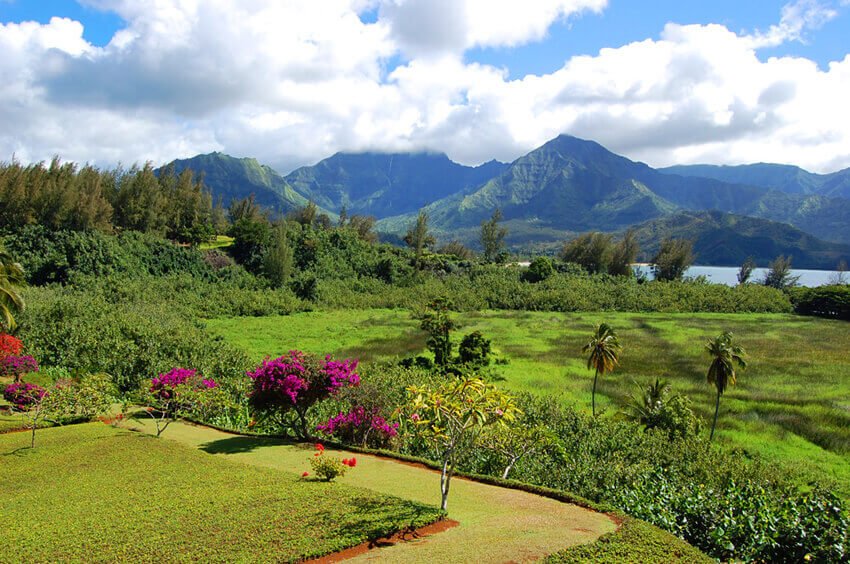
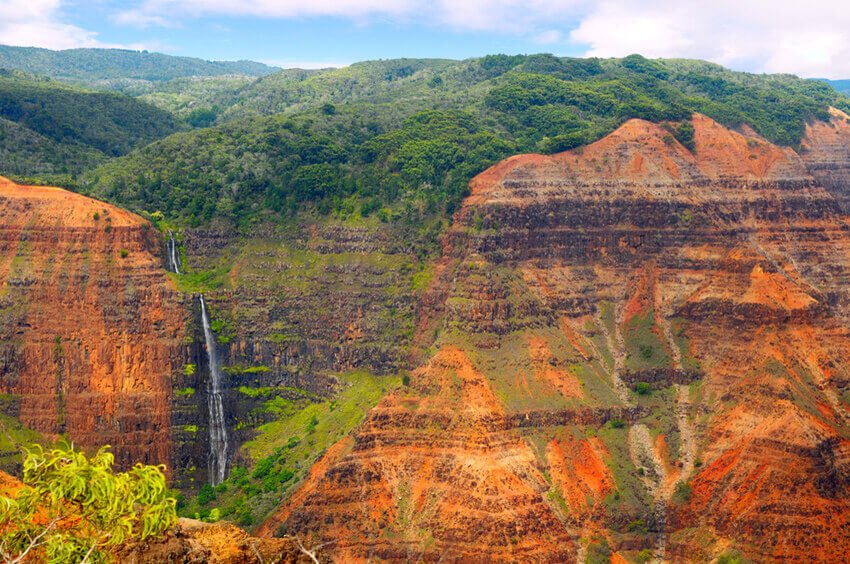
their ancestors. By simply traversing the islands and viewing the overwhelming
beauty of Hawaii, you are experiencing the strongest aspect of heritage,
the land.
Aina
Perhaps the most important aspect of Hawaiian heritage is the concept
of malama aina, or respect/caring for the land. According to the ancient
creation chant, the kumulipo, the Hawaiians are direct descendants of
the land. The ancient Hawaiians believed that land was not property
to be owned, but a gift from the gods that was to be shared to the benefit
of all. Today, Hawaiians maintain incredible pride in the beauty and
sacredness of island land and continue to apply conservation principles
to care for this irreplaceable resource. Unfortunately, only a small
number of locals with Hawaiian blood are able to live on birthright
land. There are many thousands of Hawaiians today on waiting lists today
for homestead lands.
Ohana
The ancient Hawaiians maintained a strong loyalty and dedication to
the importance of family. Hawaiians did not segregate themselves from
other families, but instead worked together to make sure all were taken
care of. Sharing was a key component – work was done to feed and shelter
large extended families, and everyone pitched in with hard work.
Talking story, the sharing of tales, beliefs and ideas, is an important
part of Hawaii’s culture today. Even in business situations, it may
be considered rude not to ask about one’s family or “talk-story” a bit
before getting down to business.
Hula
"Hula is the language of the heart and therefore the heartbeat of
the Hawaiian people." – King Kalakaua
Hula is one of the strongest aspects of Hawaii’s heritage that has
not only survived the test of time, but continues to grow and progress
while remaining true to its roots. Hula is so much more than a style
of dance. Hula tells a story through chant, gesture and movement. Performed
to honor a god or goddess, to exalt the accomplishments of a warrior,
or celebrate the beauty of the land, hula is an ancient tradition developed
in the Hawaiian Islands by original Polynesian settlers.
Hula is not merely a form of entertainment – it is to be practiced with
determination, respect and precision. Hula’s origins within the realm
of aumakua (ancestors) involve Laka, the goddess of the hula and are
steeped in legend. Hula is not frivolous movement; every motion has
a purpose and intricate meaning. In ancient times, it was used to convey
religious messages and was accompanied by ritual and prayer. Although
the hula was banned by Christian missionaries after 1820, this unique
cultural icon experienced a renaissance and has not only endured, but
continues to gain popularity. Today, the two primary forms of hula practices
are hula auana, or modern, informal hula without ceremony or offering,
and hula kahiko, or ancient hula. Led by a kumu hula, or hula teacher,
today’s hula participants attend a halau hula (hula school) for many
years.
Art
The ancient Hawaiians were skillful craftsmen with a unique perspective
on artistic nature. Na hana noeau means “wise and skillful works” and
represents works of ancient
Hawaiian art that were functional as well. Or perhaps better stated,
the Hawaiians applied aesthetic principles in their creation of useful
crafts.
Kapa is a fine material created by beating the wood of the Wauke (Paper
Mulberry) plant. Bamboo stamps with natural dye were then used to create
intricate repetitive patterns over the material. Blankets, lava lavas
and muumuus were just some of the uses for kapa. Renowned kapa artist
Puanani Van Dorpe continues to practice this amazing craft today, beating
kapa to replicate designs of old for eight or more hours a day.
Lauhala (hala leaves) are still used today for creation of many products
from bowls to hats to floor mats. The leaves are dried and stripped
and soaked to create a texture that is intricately woven into a desired
shape.
Another example of hana noeau can be found in the amazing featherwork
capes created for high-ranking Hawaiian chiefs. The brightly-colored
feathers of indigenous birds (many now extinct) were woven together
to create impressive capes that indicated rank and status. Some of these
incredible featherwork capes are on display today at Honolulu’s Bishop
Museum.
The King of the Hawaiian forest trees, the acacia koa, was used in ancient
times to build anything from giant seafaring canoes to small bowls.
Koa is still used today, although the wood is in shorter supply.
Language
E ola mau ka olelo Hawaii! The Hawaiian Language lives!
Hawaiian language is so deeply integrated into Hawaii that it is impossible
to spend a day here without learning a Hawaiian word or two. As the
only place in the world where Hawaiian language is spoken, the Hawaiian
language lives on in families who speak fluently, the keiki (children)
attending Hawaiian immersion school programs, the moolelo (story) carried
on through generations and the olelo noeau (wise saying) still spoken
by kupuna (elders).
Music
The ukulele is the most recognized aspect of Hawaiian music. Lesser
known to tourists are the ohe hano ihu, a nose flute made of bamboo
and the ipu heke ole, or gourd drum. You can spot an ukulele player
almost anywhere, from oceanside parks to backyard luaus to Waikiki concerts.
The ipu heke ole is often used during hula, and the ohe hano ihu is
still used today in local songs from falsetto to reggae. The feather
gourd (uliuli) and split-bamboo (puili) add unique sounds to the expression
of hula and Hawaiian music.
Food
Ono Grinds Eating was more than just a regular activity to Hawaiians,
and food represented the feeding of body, mind and spirit. In traditional
Hawaiian society, eating practices were rich with symbolism. The luau,
once called the aha aina, was an event that was designed to unite the
participants and foster good will, thanks and praise. The purpose of
the luau could have been to celebrate accomplishments, honor heroes
or gods, or commemorate important events. While some ancient foods represented
strength or virility, other foods might symbolize virtues or goals the
participants hoped to achieve.
The term luau refers to the taro leaf, an important component of the
Hawaiian meal. In ancient beliefs, taro was considered to be the older
brother of the Hawaiian people and the ultimate gift of sustenance and
life. Taro was eaten in many forms, including the ever-popular poi,
a paste-like substance achieved through pounding of the taro root with
a special instrument called a poi pounder. Today’s luaus are reminiscent
of the spirit of celebration and unity experienced at the luaus of old
and include many of the same great Hawaiian foods. If you haven’t yet
tried kalua pig, squid luau, lomi lomi salmon, or haupia (coconut pudding),
you can find these ono grinds at just about any local plate lunch restaurant
in the islands.
Ocean
The ocean as a resource was utilized by ancient Hawaiians in many forms,
from voyaging and travel to fishing and recreation. It was an all-important
resource for protein in the form of fish and sea creatures, and the
Hawaiians took special caution in the preservation of this resource
by respecting the reef and fishing strategically. Today, the practice
of Polynesian voyaging continues with a renaissance of instruction in
recent years.
Residents and visitors to the Hawaiian Islands are blessed to be able
to experience such a strong influence of Hawaiian heritage. Despite
the fact that the Native Hawaiian population diminished drastically
after Western contact, the ancient traditions and cultural links persevered.
Hawaiians today stay intimately connected to the ancient society that
passed on this beautiful land and the responsibilities that come with
it. If you are visiting Hawaii, make sure you take some time to see
Hawaii as it once was by learning a little about its rich and colorful
heritage.
|