Beach Safety Tips
Most
of Hawaii's beaches look inviting and for many people, the word “beach” is equivalent
to “fun.” However, swimming in the ocean is unlike swimming in a pool and especially
in Hawaii, powerful shorebreaks, high surf, strong currents and rip tides are
common. On average, 60 people die each year by drowning in Hawaii, according
to the State of Hawaii Department of Health Injury Prevention and Control Program.
The ocean may look calm, but currents, unlike high surf, are difficult to spot.
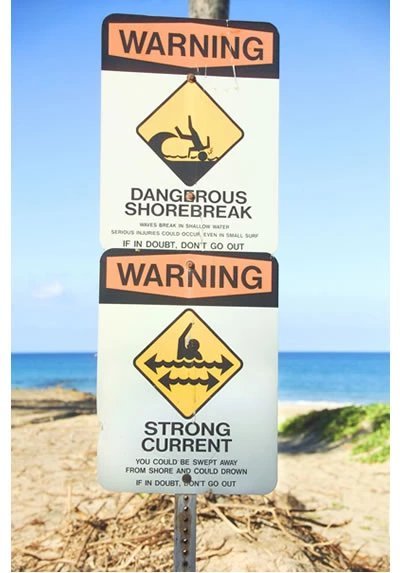
So be cautious when entering the ocean and read and obey all warning signs.
They could save your life.
Beach Safety Tip #1: Choose a beach with a lifeguard
It is best to swim at guarded beaches. But keep in mind that lifeguards are
humans too and they can't watch everyone all the time. Stay within sight and
near the shore.
Beach Safety Tip #2: Pay attention to beach warning signs
Whenever possible, signs are posted on beaches that warn beachgoers about current
dangers, such as strong currents, stinging jellyfish, sharp corals, slippery
rocks and other hazards.
Beach Safety Tip #3: Don't swim at remote beaches
If you want to swim at a remote beach and notice that no one else is in the
water, stay out. There is probably a reason why.
Beach Safety Tip #4: Never turn your back on the ocean
Sudden large waves can sneak up on you and sweep you off the beach or rocks
and pull you out to deep water without warning.
Beach Safety Tip #5: If in doubt, don't go out!
Whenever you're not sure if a beach is safe to swim at, don't enter the ocean.
Rip Currents
![]() |
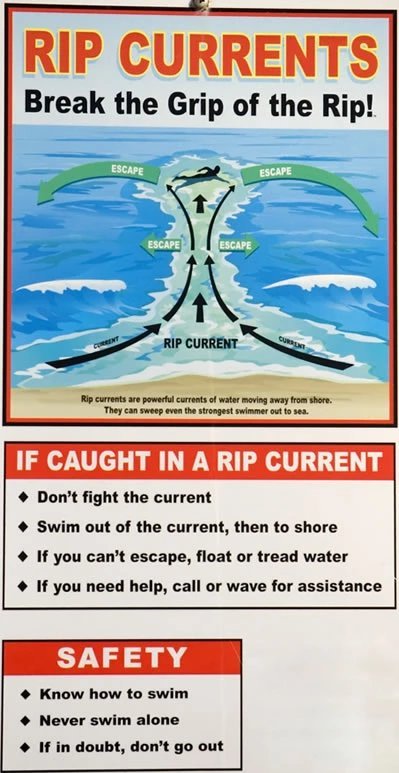
Rip currents are strong, channeled and fast-moving
currents of water flowing away from shore. They usually extend from
the shoreline and end past the area where the surf breaks. Rip currents
can be very dangerous if one gets caught in one and doesn't know what
to do. These currents account for many drownings because swimmers caught
in a rip get swept out to sea and are unable to return to shore.
Here are some safety precautions that you can take:
What to do if you find yourself in a rip current:
If you see someone caught in a current, don't become a victim too:
Final Tip: The individual beach conditions on all Hawaiian islands are seasonal, meaning that in some months a particular beach can be great for ocean activities, such as swimming, snorkeling, surfing, etc. but in other months these activities may not be possible or may even be hazardous. Always check with the lifeguards before going in the water and use common sense. And remember: "If in doubt, don't go out." |